

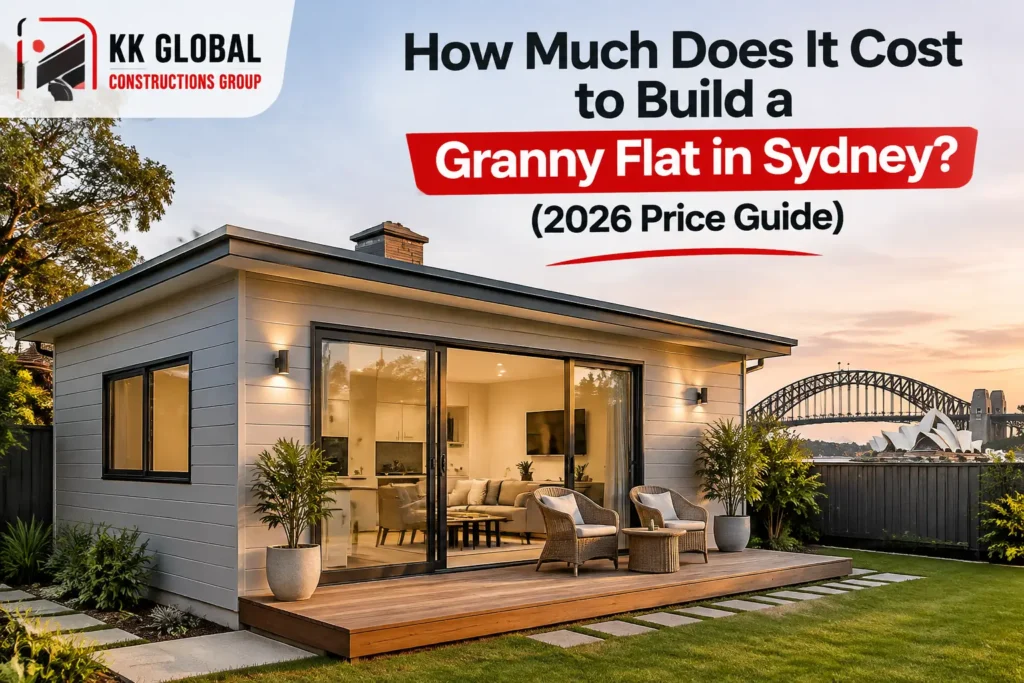
If you own a home on a reasonably sized block in Sydney, a granny flat can be one of the smartest ways to add living space, rental income and long-term property value. But the first question every homeowner asks is the same: what will it really cost?
The honest answer is that granny flat cost Sydney homeowners face in 2026 typically lands between $160,000 and $250,000 for a two-bedroom, 60 sqm turnkey build. Compact one-bedroom designs start closer to $120,000, while premium finishes or difficult sites can push a project past $300,000. The advertised “build price” is rarely the final number, because site works, service connections, approvals and insurance all sit on top of it.
This guide breaks down every line item, explains the building approval cost in NSW, compares a granny flat with the full house renovation cost Sydney owners often weigh it against, and shows you how to budget without nasty surprises. All figures are indicative ranges drawn from 2026 industry cost guides and current NSW planning rules. They are a starting point, not a quote.
Quick answer: Most turnkey granny flats in Sydney cost between roughly $2,200 and $3,500 per square metre. A 60 sqm, two-bedroom granny flat usually costs 160,000–250,000 all-in. Budget a further 10–15% for contingency, and always compare quotes on a like-for-like inclusions list.
Granny Flat Cost in Sydney at a Glance
Prices vary widely because “granny flat” covers everything from a supply-only kit to a fully custom brick dwelling. Here is how the main options compare in 2026:
| Granny flat type | Typical size | Typical cost (2026, incl. GST) |
| Kit or flat-pack (supply only) | 30–60 sqm | 80,000–130,000 before site works, assembly and connections |
| Modular / prefab, installed | 45–60 sqm | 120,000–185,000, plus crane access and site works |
| One-bedroom, site-built turnkey | 40–50 sqm | 120,000–180,000 |
| Two-bedroom, site-built turnkey | About 60 sqm | 160,000–250,000 |
| Premium two-bedroom (high spec or full brick) | About 60 sqm | 250,000–315,000+ |
Treat the cheapest figures with caution. Kit and prefab prices usually cover the structure only. Once you add slab or footings, plumbing, electrical connections, approvals and landscaping, the finished cost is often far higher than the headline number.
Granny Flat Cost Per Square Metre in Sydney
Most completed Sydney projects sit between $2,200 and $3,500 per sqm, and high-end builds can go beyond that. Eastern Sydney and the North Shore sit at the top of the range, while level blocks in Western Sydney with services close by are often reported in the 150,000–180,000 bracket for a two-bedroom home.
Small buildings cost more per square metre than a project home, and that surprises many owners. A granny flat still needs a full kitchen, a full bathroom, waterproofing, hot water and complete service connections, just spread across very few square metres. That is why a 45 sqm one-bedroom plan is not simply “three quarters of the price” of a 60 sqm two-bedroom.
A useful rule: every extra square metre adds roughly 2,200–3,300 or more to construction cost. A well-planned 50 sqm layout can feel just as liveable as a poorly planned 60 sqm one, so design efficiency matters more than raw size.
Full Cost Breakdown: Where Your Money Actually Goes
Here is an indicative budget for a typical 60 sqm, two-bedroom granny flat. The ranges overlap with turnkey packages, so do not simply add every line together. Instead, use the list to check what your builder has and has not included.
| Cost item | Indicative range | What to know |
| Design, drafting, engineering and approvals | 4,000–18,000 | Depends on CDC vs DA, reports required and certifier fees |
| Soil test (geotechnical) | 1,000–1,500 | Cheap insurance against expensive slab surprises |
| Site works (excavation, drainage, access, slab prep) | 15,000–60,000 | The most variable item; slope, rock and access drive it |
| Water, sewer, power connections | 8,000–18,000 | Rises sharply with distance from the existing house services |
| Construction (about 60 sqm) | 132,000–210,000 | Based on 2,200–3,500 per sqm |
| Second bathroom or toilet | 12,000–25,000 | Also consumes floor area from your size cap |
| Contingency | 10–15% of build | Standard practice for unknowns below ground |
1. Design, engineering and certification
Before a builder lifts a tool, you need architectural or drafting plans, structural engineering, a BASIX certificate for energy and water efficiency, and often a survey. Industry guides put combined design and approval costs anywhere from about $4,000 to $18,000, depending on the pathway and how complex your site is.
2. Site works: the biggest unknown
Excavation, retaining walls, stormwater drainage, rock removal and access for trucks can add anywhere from $15,000 to $60,000. A sloping or tight-access block can cost significantly more than a flat backyard with side access. This is why a soil test and detailed site inspection before signing any contract are worth every dollar.
3. Service connections
Connecting water, sewer, stormwater, electricity and sometimes gas can cost 8,000–18,000. The single most common hidden cost is a sewer connection when the main is far from the planned building site. Where possible, position the granny flat close to existing services, and ask your builder to confirm whether any build-over-sewer approval is needed.
4. The build itself
This covers footings or slab, framing, roof, cladding, windows, internal linings, kitchen, bathroom, flooring, painting and fixtures. Brick veneer is the common mid-range choice, while full brick, stone benchtops, high-end fittings and two-storey designs lift the per-square-metre rate.
5. Insurance, inspections and extras
In NSW, residential building work over $20,000 generally requires home warranty insurance, and your builder must hold a current contractor licence. Add certifier inspections, an occupation certificate, landscaping, fencing, driveway changes, air conditioning and appliances. Many of these are listed as exclusions in low-priced quotes, so read the fine print.
Building Approval Cost for a Granny Flat in NSW
The building approval cost depends on which of the two NSW pathways applies to your block: a Complying Development Certificate (CDC) issued by a private certifier, or a Development Application (DA) assessed by your local council.
| CDC (private certifier) | DA (local council) | |
| Typical timeframe | About 10–20 business days once documents are complete | 2–6 months, sometimes longer with objections |
| Typical fees | Around 3,000–5,000 for certification and lodgement | 5,000–10,000+ including council fees and consultant reports |
| Best suited to | Lots that meet every prescribed standard | Heritage, undersized or constrained lots, or designs outside the standards |
| Predictability | High, if every standard is met | Lower; neighbours may comment and councils can request changes |
Fees for design, engineering, BASIX and reports are usually additional, and some councils or water authorities charge local infrastructure or servicing contributions. Ask your certifier to list every government charge before you commit.
NSW rules that directly affect your budget
Under the State Environmental Planning Policy (Housing) 2021 and the Codes SEPP, the standard complying pathway generally requires:
• A lot of at least 450 sqm for a detached secondary dwelling, with a minimum frontage commonly cited as 12 metres.
• A maximum floor area of 60 sqm for the granny flat under the complying pathway.
• Only one secondary dwelling per lot, and the granny flat cannot be subdivided off and sold separately from the main house.
• Compliance with setbacks, site coverage, private open space and BASIX requirements.
Heritage areas, bushfire-prone land, flood-affected sites and easements can push you from a CDC to a DA, or add extra reports and construction requirements, which increases cost. Before spending money on design, order a Section 10.7 planning certificate from your council and have your builder or certifier confirm which pathway applies. Rules change, so verify current requirements on the NSW Planning Portal.
What Pushes Granny Flat Costs Up or Down?
Size and layout
A second bedroom and bathroom can add 25,000–45,000 over a one-bedroom design. Corridors waste expensive floor area, so open-plan layouts with a compact wet-area zone deliver more usable space per dollar.
Construction method
Prefab and modular homes can shorten build time, but crane hire, transport and site preparation still apply. Site-built granny flats offer more design flexibility and are the mainstream choice on tight Sydney blocks.
Site conditions
Slope, reactive clay, rock, poor access, trees and the distance to existing services are the biggest causes of budget blowouts. None of them is visible in a brochure, which is why a detailed site inspection matters.
Finishes and specification
Stone benchtops, full brick, premium tapware, ducted air conditioning and high ceilings all lift the rate per square metre. Choose durable, mid-range finishes for a rental and spend extra only where tenants or buyers notice it.
Location in Sydney
Labour, access and council requirements vary across the city. Eastern and northern suburbs generally cost more than outer western areas, and tight lots in older suburbs often require more engineering.
Hidden Costs Homeowners Often Miss
• Sewer and stormwater connection distance, and any build-over-sewer approvals.
• Tree removal, tree protection or arborist reports.
• Rock excavation, retaining walls and reactive soil engineering.
• Landscaping, paths, fencing, driveway widening and bin storage.
• Air conditioning, appliances, window coverings and light fittings, often listed as exclusions.
• Temporary power, site access, traffic control and crane hire.
• Rental setup costs such as furnishing, smoke alarms, insurance updates and property management.
Granny Flat vs Full House Renovation Cost in Sydney
Many homeowners ask whether the money is better spent on a granny flat or on a renovation. The two projects solve different problems, but comparing costs helps you decide.
A full house renovation cost Sydney wide is usually quoted at around 3,000–5,000 per sqm for mid-range to high-quality work, and whole-home projects commonly range from about $150,000 for lighter scopes to $600,000 or more for structural changes. On a 150 sqm home, a comprehensive renovation can therefore reach 450,000–750,000. Older homes with asbestos, rewiring or structural repairs push that figure higher, and once a renovation approaches 60–70% of the cost of a rebuild, a knock-down rebuild may offer better value.
| Granny flat | Full house renovation | |
| Typical budget | 160,000–250,000 (60 sqm) | 150,000–600,000+ depending on scope |
| What you gain | Extra dwelling, rental income or family space | Better layout, condition and comfort in your main home |
| Income potential | Often 400–600 per week in Sydney | None directly; value through resale or lifestyle |
| Disruption | Low, as work happens in the backyard | High if you live in the home during works |
| Approval path | CDC or DA | Often not needed for cosmetic work; DA or CDC for structural change |
If your main home is in good condition and your block qualifies, a granny flat usually delivers more flexibility per dollar. If the house itself is tired, a renovation may need to come first. The two projects can also be staged together, which is something to discuss with your builder.
Is a Granny Flat Worth It? Rental Return Explained
Typical Sydney granny flat rents run around 400–600 per week, with inner-city suburbs achieving more. As a simple example, a $175,000 build renting at $550 per week produces about $28,600 per year in gross rent, or roughly a 16% gross return on the build cost.
Remember that this is a gross figure. Vacancy, insurance, council rates, maintenance and management fees reduce it, and rental income is taxable. A granny flat can also affect land tax and capital gains tax treatment of your property, so speak to an accountant before you build. This article is general information, not financial or legal advice.
Seven Practical Ways to Reduce Granny Flat Costs
1. Design efficiently. Keep rooflines simple, avoid long corridors and group wet areas together to cut plumbing runs.
2. Place it near services. A shorter sewer, water and power run can save thousands.
3. Test the soil early. A soil test of about 1,000–1,500 before you sign avoids costly slab redesigns.
4. Use the CDC pathway if eligible. It is typically faster and cheaper than a full DA.
5. Choose a fixed-price contract. Insist on a detailed inclusions and exclusions schedule so variations are limited.
6. Select durable mid-range finishes. Tenants value function and cleanliness more than luxury upgrades.
7. Compare quotes like for like. The cheapest quote often leaves out site works, connections or approvals.
How to Choose the Right Granny Flat Builder in Sydney
The builder you choose affects cost certainty as much as the design does. Before signing, check the following:
• Licence: Confirm the builder holds a current NSW contractor licence through NSW Fair Trading.
• Insurance: Ask for the home warranty insurance certificate before paying any deposit. Deposits on contracts over $20,000 are capped at 10% in NSW.
• Experience: Look for completed granny flat projects in your council area, with references and photos.
• Contract clarity: A fixed-price contract, staged progress payments and a written schedule of inclusions, exclusions and allowances.
• Approvals support: Choose someone who manages design, certification and construction, so nothing falls between trades.
• Defect and warranty process: Know exactly who to call after handover and what is covered.
At KK Builders and Developers, we encourage homeowners to ask every builder these questions, including us. A transparent, itemised quote is the best protection for your budget.
Frequently Asked Questions About Granny Flat Cost in Sydney
How much does a 2-bedroom granny flat cost in Sydney?
Most 60 sqm, two-bedroom turnkey granny flats in Sydney cost between $160,000 and $250,000 in 2026, depending on the site, finishes and approval pathway. Premium specifications can exceed $300,000.
Do I need council approval to build a granny flat in Sydney?
Not always. If your lot and design meet every complying development standard, a private certifier can issue a CDC without a council DA. Sites that fall outside those standards need a DA.
How long does it take to build a granny flat in Sydney?
Plan for design and approvals first, which can take several weeks for a CDC and several months for a DA. Construction itself commonly takes a few months, depending on size, weather and site conditions. Ask your builder for a written timeline.
Can I rent my granny flat to anyone?
In NSW, you can generally rent a granny flat to anyone, not only family members, provided it is lawfully approved. Check current rules and your tax position before listing it.
Can I subdivide and sell my granny flat separately?
No. A secondary dwelling approved under the Housing SEPP cannot be subdivided from the main property.
Is a granny flat cheaper than a full house renovation?
Often, yes. A 60 sqm granny flat generally costs less than a comprehensive renovation of an average home, although the two deliver different outcomes.
Does the quoted price include GST?
Most residential quotes include GST, but always confirm in writing and check which site works, connections and approvals are included.
Conclusion: Plan the Whole Budget, Not Just the Build Price
The real granny flat cost Sydney homeowners should plan for in 2026 is a total project figure, typically $160,000 to $250,000 for a 60 sqm two-bedroom home, built from construction costs of about $2,200 to $3,500 per sqm plus site works, service connections, design, certification and a contingency buffer. The building approval cost is usually a small share of the total, but the pathway you choose affects timing, certainty and risk. And when you compare a granny flat with a full house renovation cost Sydney project, you are really comparing two different investments: one adds a new dwelling and income, the other upgrades the home you live.